Atlynx
The world as it is. And as it was.
The map as it is on the ground.
Official maps show the world as governments agree it should be. Atlynx shows it as it is: who controls the land today, recognised or not.
That includes occupations international law deems illegal. Drawing them is not endorsing them. It is the only way to read the news with the map in front of you.
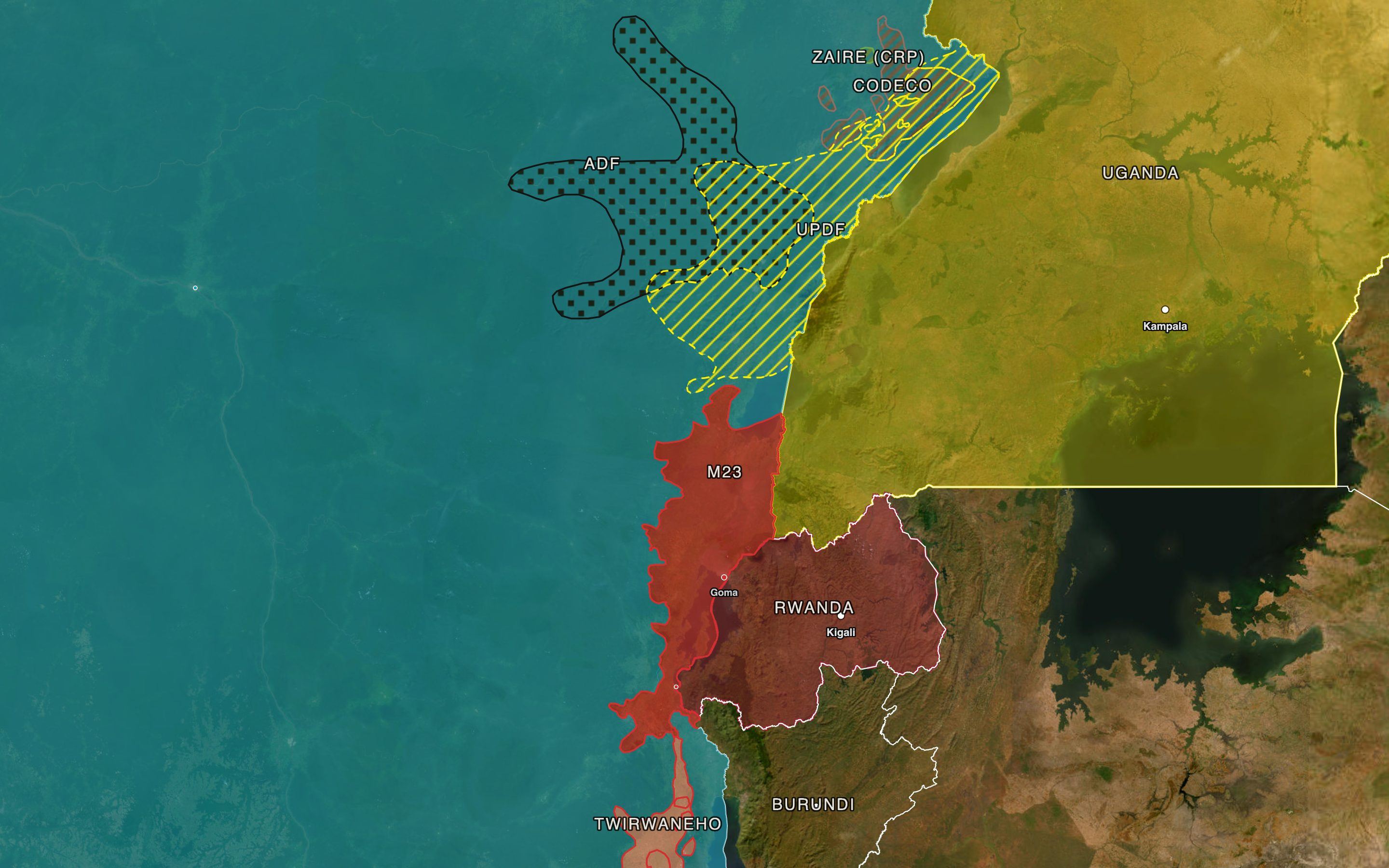
How to read it
- Solid fill. Who controls the ground.
- Stripes. A claim, or ground just taken.
- Hatching. Control that is shared or incomplete.
- Dots. A presence without full control.
- Dashed edge. A line that holds on the ground, or used to.
Eastern Congo, September 2026
When a front line moves, the map moves with it.
More than four hundred places, each drawn by who actually holds it.
A few of them, to begin with. The map holds many more.
1 of 10
Ukraine
Occupied Ukraine in its own green — lighter than Russia, so an occupation never reads as an annexation.
2 of 10
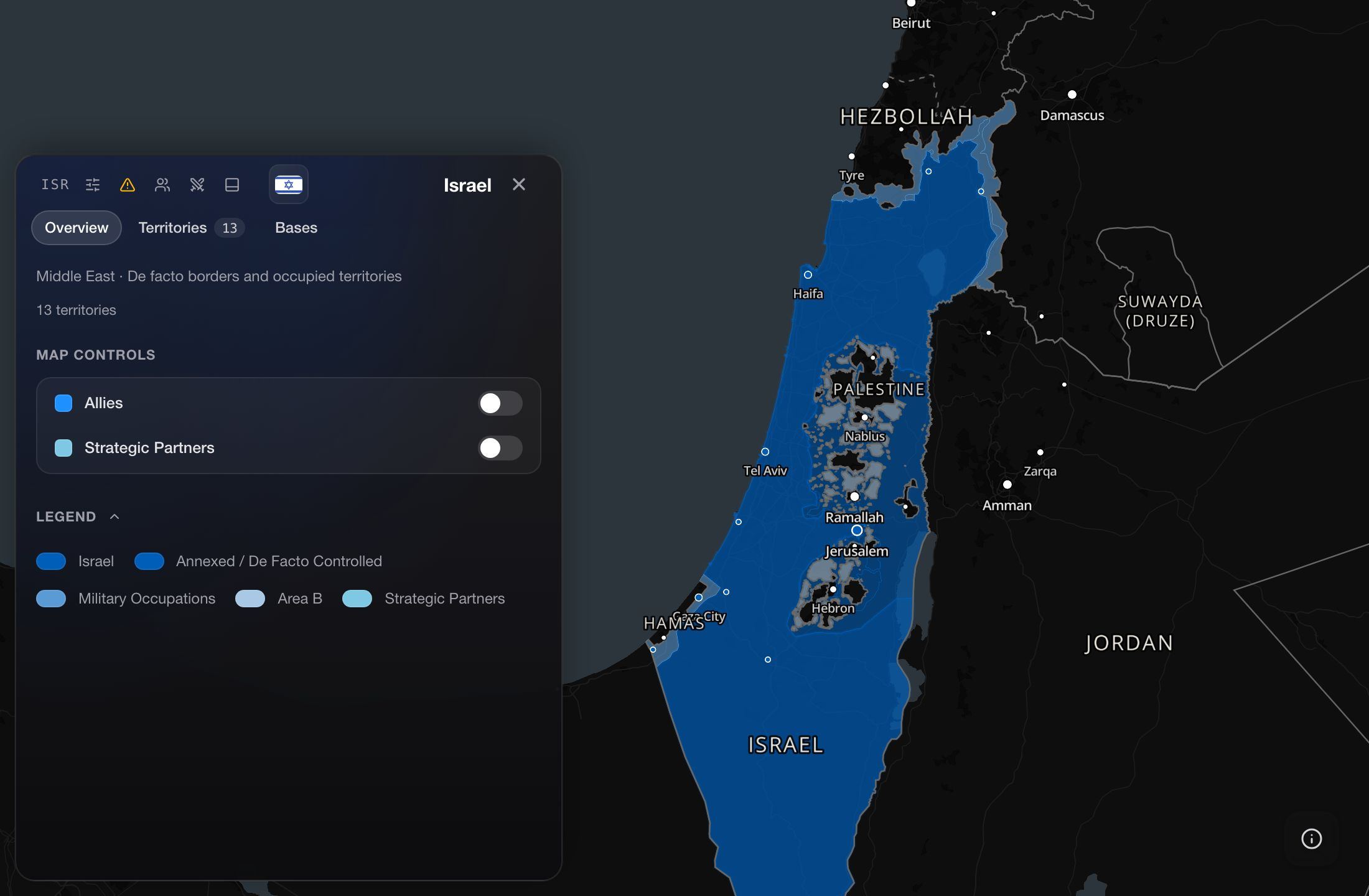
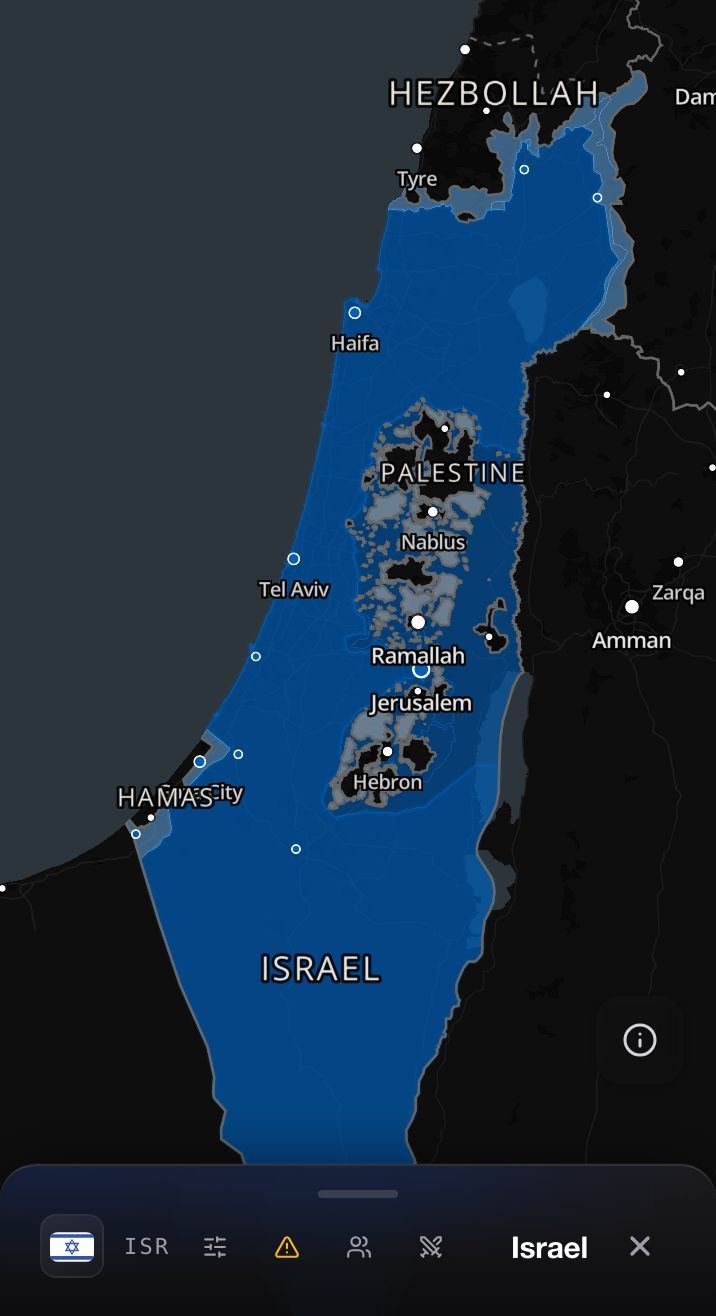
Israel and Palestine
Gaza, Areas B and C, Hebron’s H2, and the ground Israel holds in Lebanon and Syria — each a region of its own.
3 of 10
Turkey
The ground it holds at home and beyond its borders, and the states in its orbit — outlined in its red, never painted over.
4 of 10
Syria and Iraq
A Turkish-garrisoned belt, a strip Damascus shares with the SDF, and Kurdistan split between its two parties.
5 of 10
Yemen
The Houthi advance down the Red Sea coast, with the old front still traced beneath it.
6 of 10
Myanmar
Two dozen armies, militias and governments, and the ground each one holds.
7 of 10
The South China Sea
Six claimants, one sea: who holds each reef in the Spratlys and the Paracels, and the line China draws around all of it.
8 of 10
The Sahel and Lake Chad
JNIM, Islamic State and Boko Haram, across borders that stopped meaning much years ago.
9 of 10
Eastern Congo
M23, the ADF, CODECO and the Ugandan army — each in its own pattern.
10 of 10
The Himalayas
Every line China, India, Pakistan, Nepal and Bhutan dispute: coloured by who holds it, striped by who claims it.
And the small ones: a condominium Germany and Luxembourg share, the rocks of Imia/Kardak, the summit of Mont Blanc.
This is a selection. Sudan, Ethiopia and Eritrea, Libya, Somalia, the Fergana Valley and many more are on the map.
Try it.
Israel is open. Tap the West Bank to see what Area C means, or pick any of its thirteen territories from the list.
And everything on top.
Alliances and organisations
NATO, the UN, BRICS and the rest, painted onto the map.
Bases abroad
Who keeps soldiers where, and whose flag flies over them.
The sea lanes
Most of the world’s trade moves by sea. See the chokepoints, from Malacca to Suez to Panama.
Space
128 launch sites, spaceports and ground stations.
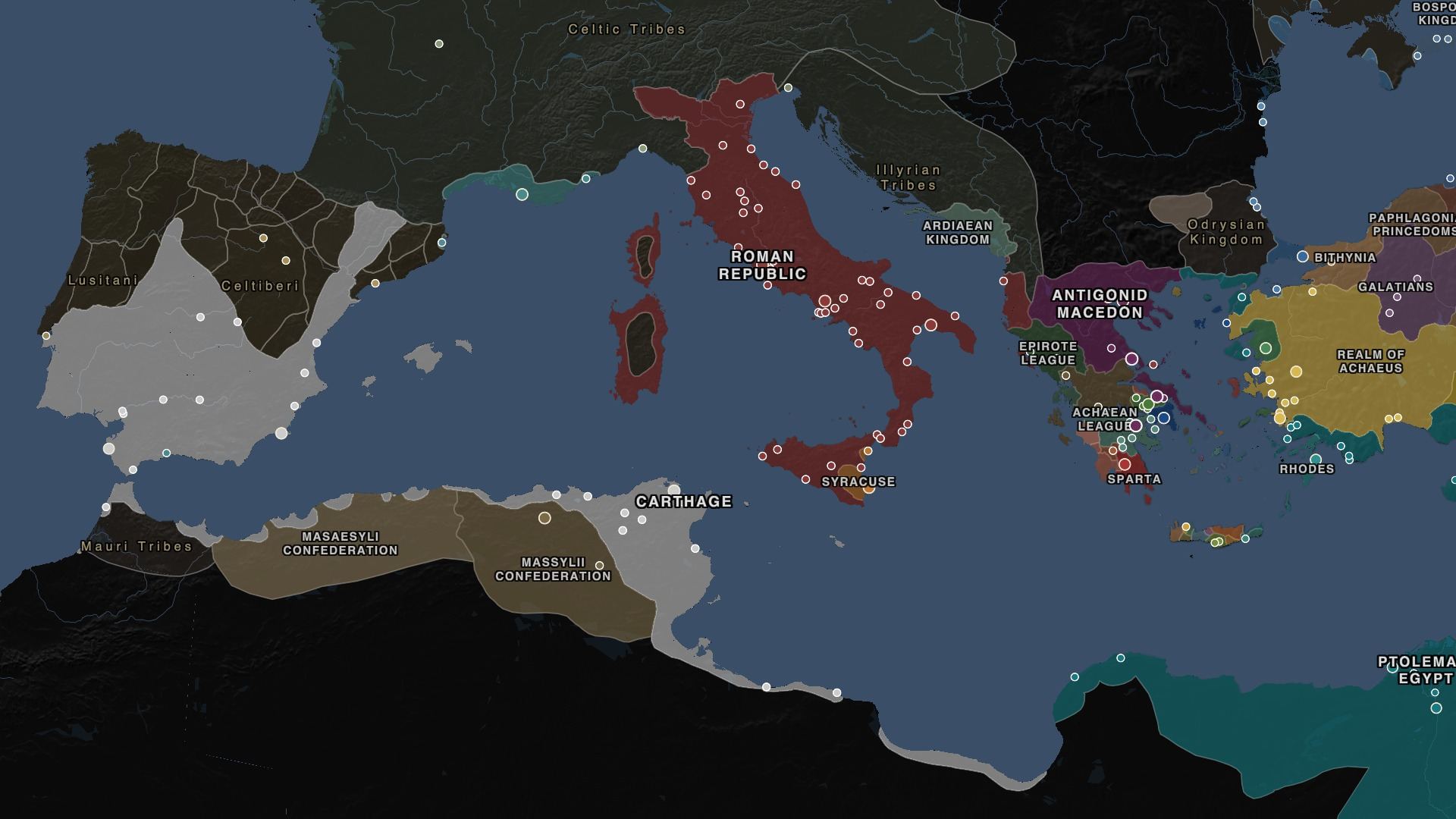
Every border on this map was once a front line.
218 B.C.
Hannibal at the Gates
“You know how to win, Hannibal; you do not know how to use a victory.”
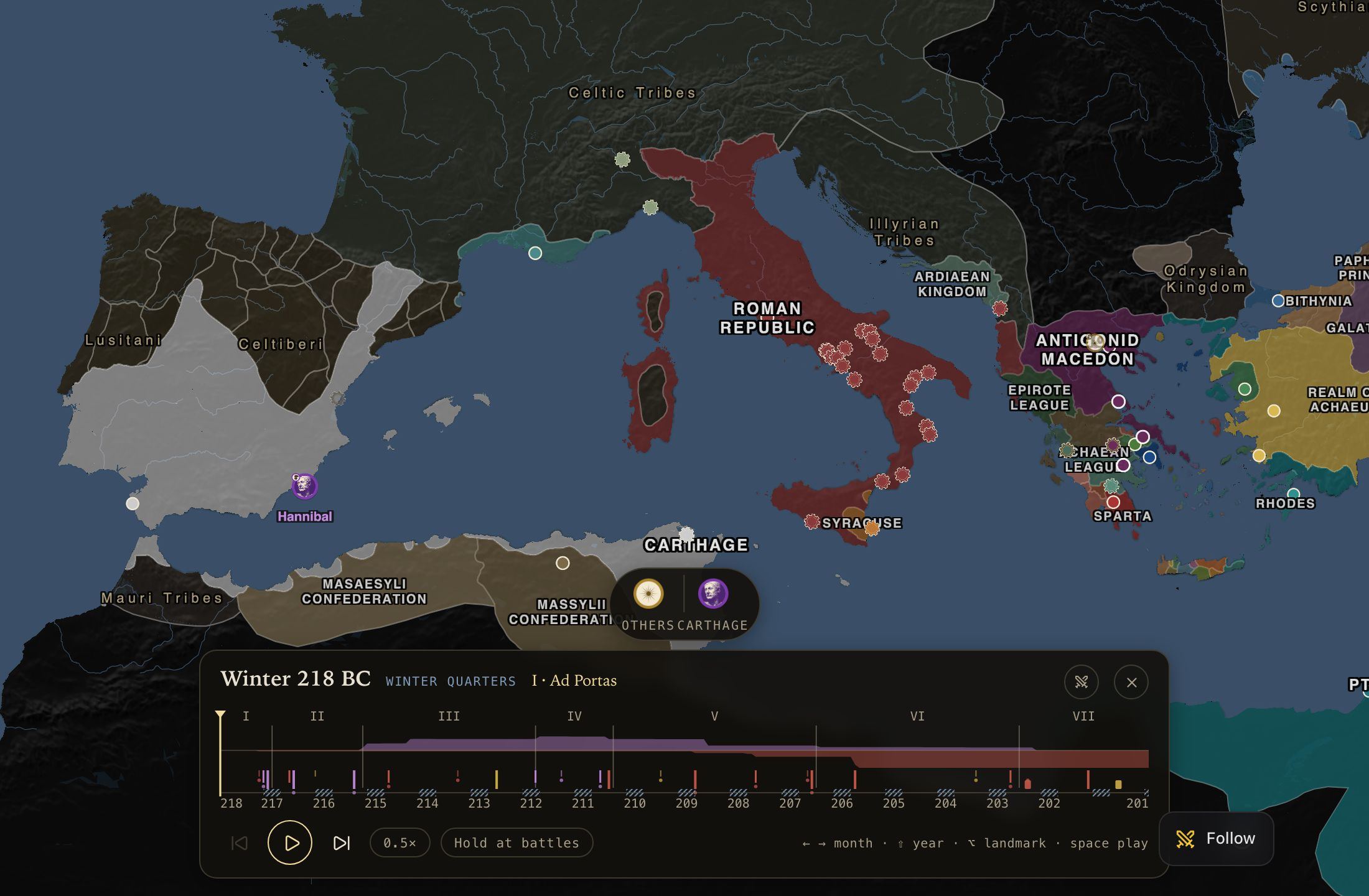
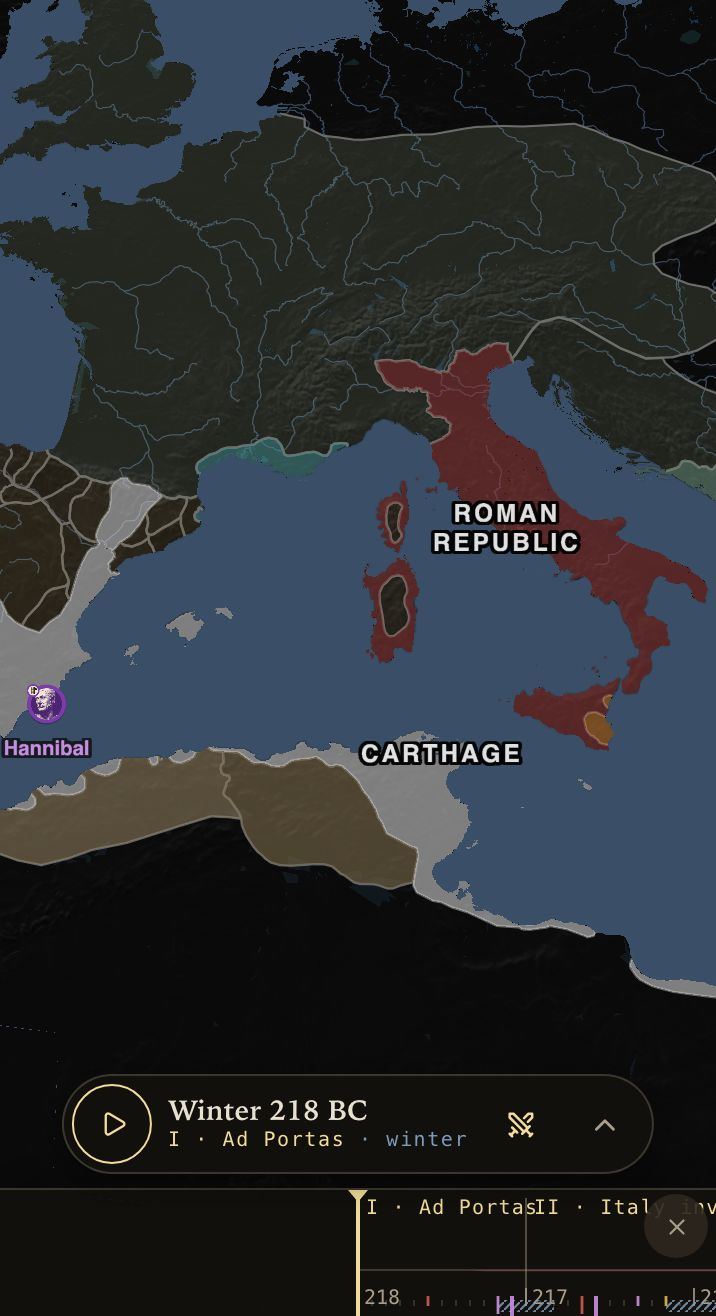
Rome and Carthage go to war for the second time. Follow Hannibal over the Alps, Scipio into Spain and Africa — six campaigns across seventeen years, stop by stop, where they happened.
Orbis Terrarum opens the whole known world: every nation, every city, and the Alexandrias founded a century earlier.
Move through the war.
Press play, or drag the ruler across seventeen years. Follow a general to march with him.
Two hundred years before Hannibal.
431 B.C.
Thucydides’ Trap
“It was the rise of Athens and the fear that this inspired in Sparta that made war inevitable.”
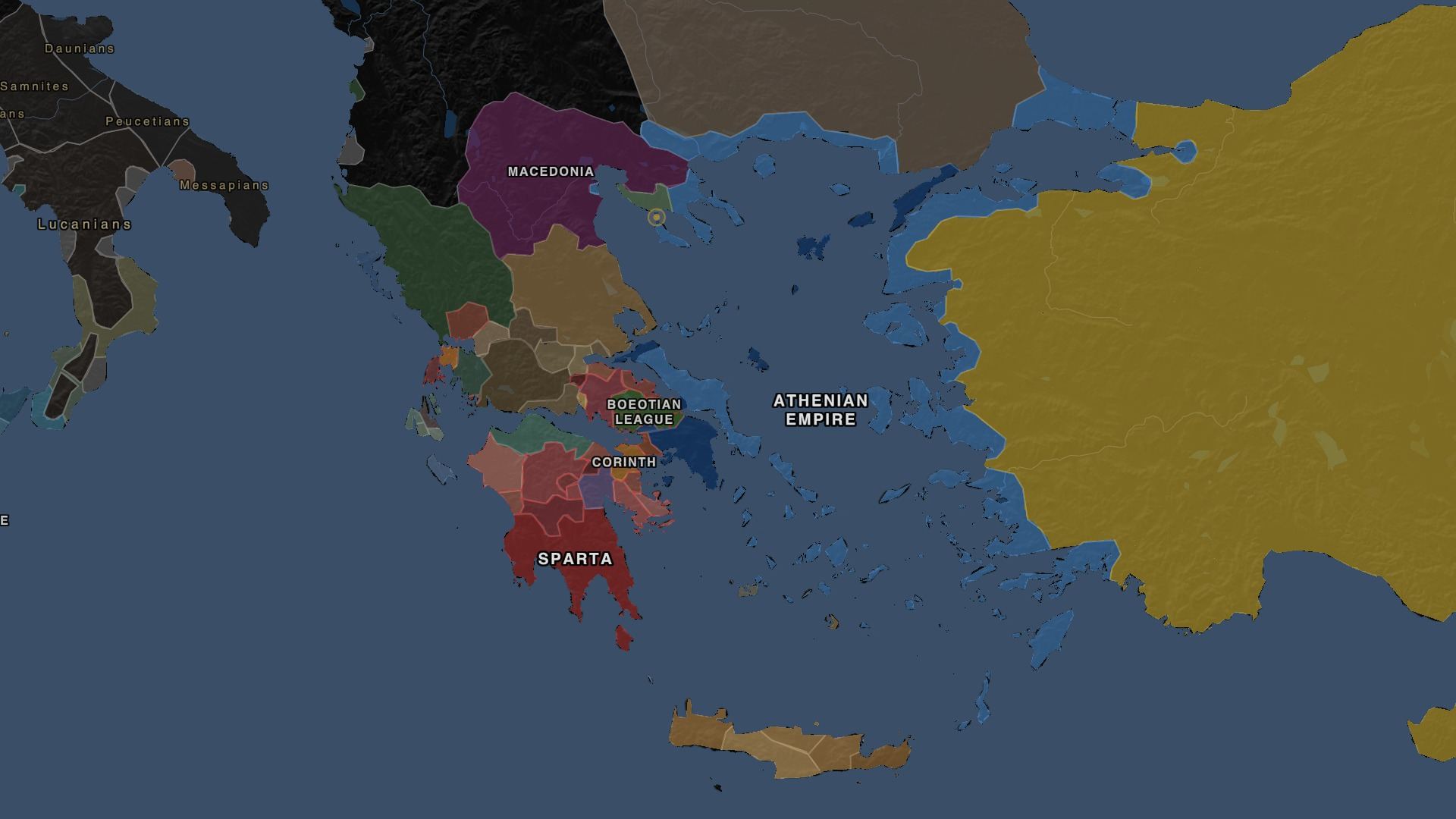
The Greek world on the eve of history’s most documented war: Athens and its Delian League, Sparta and its allies, and the Persian Empire watching from the east — with Thucydides beside the map.
Further back, the map turns into myth.
Mythos
The Odyssey
“Sing to me of the man, Muse, the man of twists and turns driven time and again off course, once he had plundered the hallowed heights of Troy.”
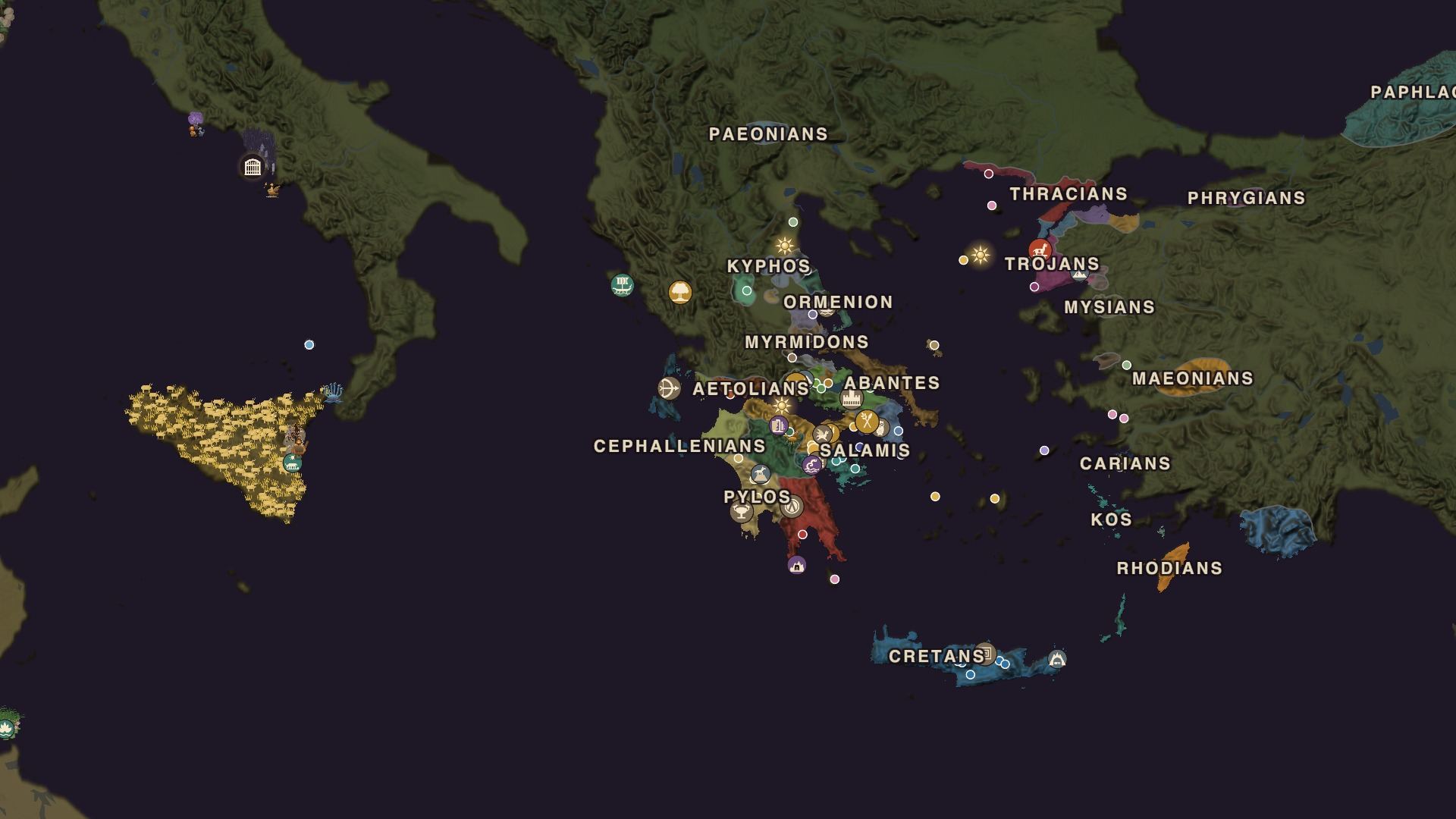
The world as Homer’s listeners imagined it, following Victor Bérard’s reconstruction. Sail with Odysseus and Telemachus stop by stop, visit the kingdoms of the Catalogue of Ships, and climb to Olympus.
Four worlds, four eyes.
Each map has its own mark. Pick one to open its world.

2026
Red
The original eyes. The present.
218 B.C.
Inscription gold
The gold of words cut in stone.

431 B.C.
Aegean blue
The sea Athens ruled.

Mythos
Wine
Homer’s wine-dark sea.
More worlds are on the way.
Their eyes open one by one.
44 B.C.
The Ides of March
117 A.D.
Pax Romana
476 A.D.
Fall of the West
1096 A.D.
The First Crusade
1492 A.D.
The New World
1812 A.D.
The Eagle's Apex
1901 A.D.
Britannia Rules the Waves
1914 A.D.
Europe's Last Summer
1939 A.D.
The Storm Breaks
1942 A.D.
The Turning Tide
1960 A.D.
Winds of Change
Put an empire where you live.
True Size
Pick up any state, ancient or modern, and move it anywhere, resized honestly as it goes. The Persian Empire of 431 B.C. covers the whole European Union with room to spare.
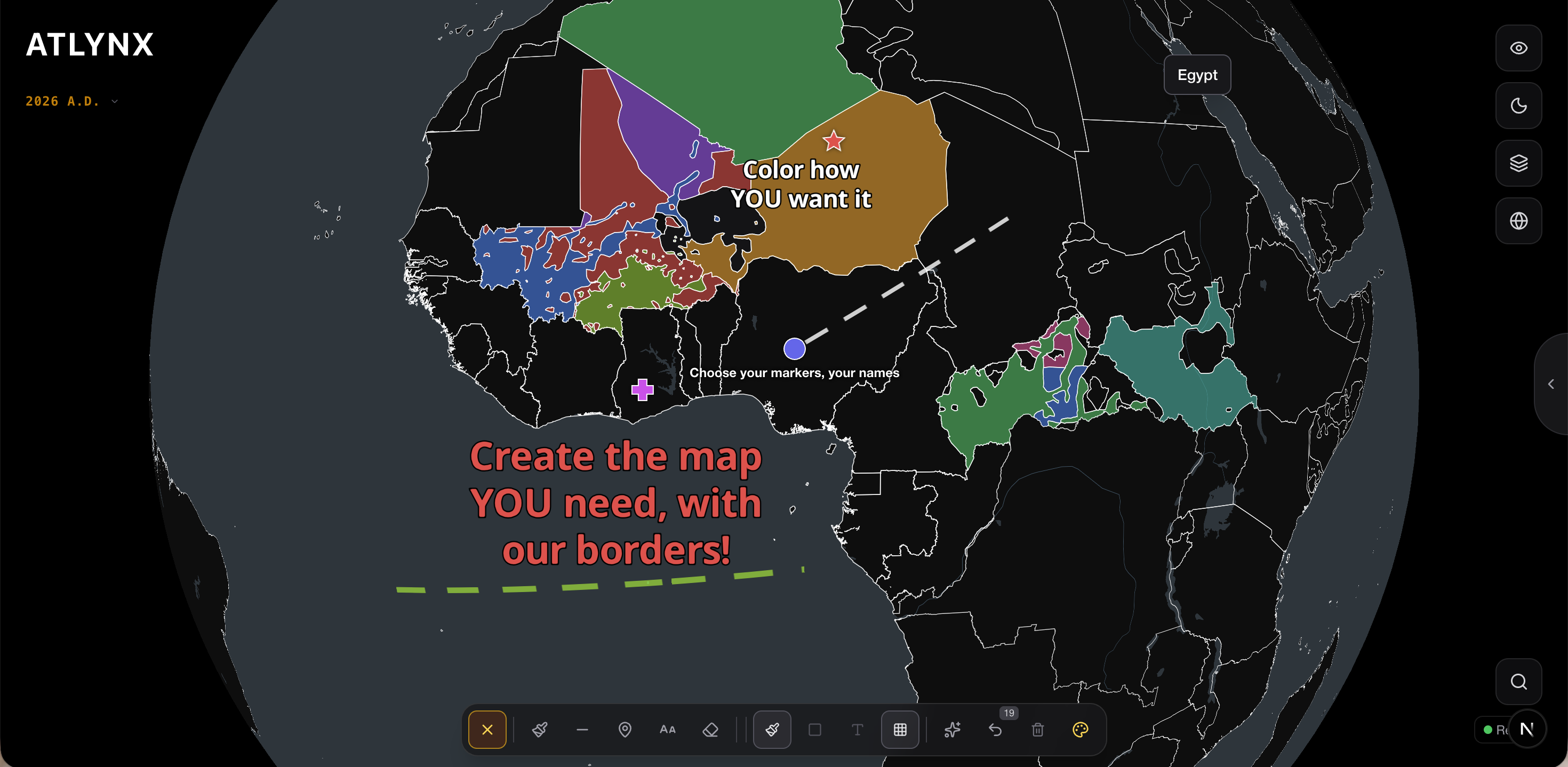
Photo Mode
Colour the map, add markers, lines and text, build a legend, and export a high-resolution image — for analysts, journalists and students.